CS2 Ranks Guide
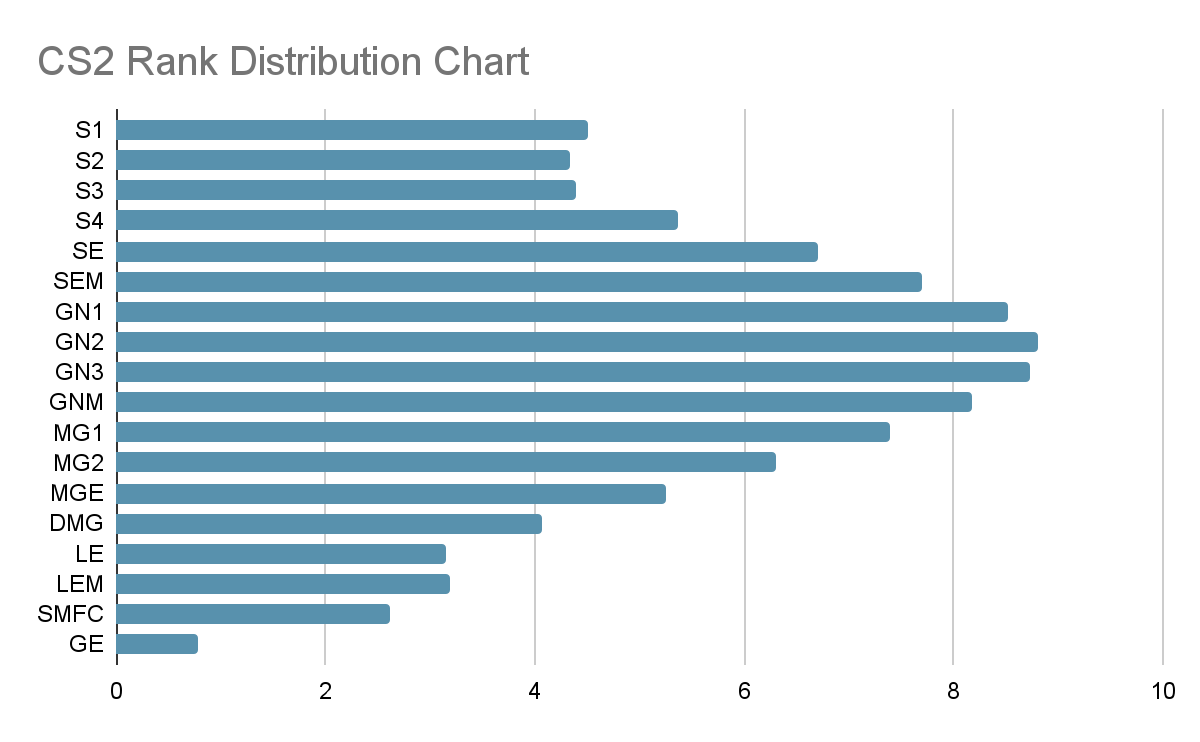
CS2 Ranking System Overview
CS2 has two ranking systems: the traditional Competitive Skill Groups and the newer Premier Mode rating. Both track your skill level, but they work differently.
Competitive Skill Groups
The classic 18-rank system from CS:GO returns in CS2, applied per-map:
Silver Ranks
- Silver I (S1) — ~5% of players
- Silver II (S2)
- Silver III (S3)
- Silver IV (S4)
- Silver Elite (SE)
- Silver Elite Master (SEM)
Gold Ranks
- Gold Nova I (GN1)
- Gold Nova II (GN2)
- Gold Nova III (GN3)
- Gold Nova Master (GNM)
Master Guardian Ranks
- Master Guardian I (MG1)
- Master Guardian II (MG2)
- Master Guardian Elite (MGE)
- Distinguished Master Guardian (DMG)
Elite Ranks
- Legendary Eagle (LE)
- Legendary Eagle Master (LEM)
- Supreme Master First Class (SMFC)
- The Global Elite (GE) — top ~1% of players
Premier Mode Rating
Premier uses a visible numerical rating (similar to ELO). Your rating starts after 10 placement matches and goes up or down based on wins and losses. The rating corresponds to color tiers:
| Rating | Color | Approximate Skill Level |
|---|---|---|
| 0 - 4,999 | Grey | Silver - Gold Nova |
| 5,000 - 9,999 | Light Blue | Gold Nova - MG |
| 10,000 - 14,999 | Blue | MG - DMG |
| 15,000 - 19,999 | Purple | DMG - LE |
| 20,000 - 24,999 | Pink | LEM - SMFC |
| 25,000 - 29,999 | Red | SMFC - Global |
| 30,000+ | Gold | Top players worldwide |
How Rating Changes Work
- Wins increase your rating, losses decrease it
- Round difference matters — a 13-5 win gives more rating than 13-11
- Individual performance has some impact but team result is primary
- Opponent rating affects gains — beating higher-rated teams gives more points
- Inactivity can cause rating decay over time
Tips to Rank Up
- Play consistently — regular play prevents rank decay and keeps your skills sharp
- Warm up before competitive — 15-20 minutes of Deathmatch or aim training
- Learn 2-3 maps deeply rather than playing all maps at a surface level
- Communicate with your team — callouts win rounds
- Focus on fundamentals — crosshair placement, utility usage, and positioning matter more than flashy plays
- Review your demos — watch your losses to identify mistakes
- Play with a consistent group — solo queue has higher variance
- Don't tilt queue — take breaks after 2-3 losses in a row